

I have been a professional technical translator since 2007, translating from English, German and French into Czech. Mostly technical manuals, contracts, business documents, etc.
My IT background
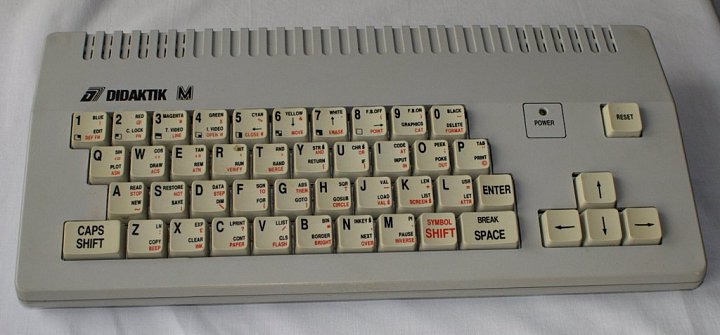
Also , I have always been interested in computers and in computer programing (since I was 13, when I got my ZX Spectrum), and obtained my degree in Applied Computer Science in 2011. I know C#, Java, C++, X86 assembler, database technologies (SQL, mySQL, SQLite, the Entity Framework, MongoDB, etc.), web technologies and languages (HTML, CSS, JavaScript, PHP), a fair knowledge of data structures and algorithms, networks, discrete mathematics… and all the stuff you would expect from a developer. But the thing with my IT career is that it came too late. By the time I finished my studies, my other business (translations) was already booming…. and starting in IT as a rookie did not really appeal to me too much, both financially as well as from the time-management point of view. I did not want to be an employee… and I had too little of experience to be a translator. On the other hand, as a translator, I was already happily freelancing, totally independent and could manage my time the way I wanted.
When I discovered CAT tools…
When I started in the translation industry, I soon discovered the CAT tools. Yes, sure, CAT tools are a real blessing… at least if you work with a good one. In the very beginning, I actually worked almost exclusively with Trados. And yes, Trados is good, really good. It’s perhaps the best tool a translator can get. But that’s not the point of this article.
Productivity, productivity, productivity…
The point is that I soon discovered that I can translate things much faster and effectively in Trados than in any other tool… those infamous German tools in particular. This intrigued me a lot, and unfortunately enough, I soon developed a very intense dislike towards A***** and T******.
And it got me thinking: Well, there are basically 3 ways of dealing with this problem: 1) I can either explain to my customers that translating a document in A***** would take at least 2× more time, and ask them to pay 2× more money (they did not like this idea too much), or 2) refuse any A*****/T****** jobs altogether (not too good for my personal finances), or 3) do the work the German programers should have done themselves in the first place.
After much thinking, I decided to go for the option No. 3. And in this article, I am going to explain how I did it.

My IT education kicked in…
And this is where my IT education came in: I soon discovered that there was actually a way of how various Windows applications can communicate with each other. And I asked myself: Could I actually take any advantage of this to make the work in A*****/T****** at least sufferable? And after some experimenting, I suddenly came to a clear conclusion. And this is the exact moment when Bohemicus was born.

And Bohemicus was born!
I am not going to lose too much time on explaining how Bohemicus works – you have the whole Bohemicus website for this. So, just a short explanation: Bohemicus mostly runs in the background, so that you can keep working in your CAT tool… and whenever you need any of Bohemicus’ functionality, you can simply press a pre-defined hotkey, and Bohemicus will deliver any results directly into your CAT tool. So you don’t have to leave your CAT tool for a second.

This was certainly a major improvement to my work in any CAT tool whatsoever. Machine translation? Speech to text? Looking up for terms in my own translation memories, termbases and dictionaries? Not a problem with Bohemicus – I could do that in any CAT tool whatsoever – Across, Transit, Trados, memoQ, WordFast, SmartCat, Crowdin, XTM, you name it. I suddenly had all the desired functionality within ¨my very quick reach, at my very fingertips.
An added bonus
Plus there was an added bonus: Even when my project manager tried to exclude any functionalities of a given CAT (like deactivating machine translation in server-based memoQ projects), I could just laugh at it: you want to prevent me from using any machine translation? Well, you can try… but with Bohemicus, it’s at my reach by just pressing Ctrl+Space….
I like challenges…
There was even this recent challenge: the OneForma CAT tool… they won’t allow you to edit the source text in any way, thereby preventing the use of any machine translation or any comfort of work whatsoever. Not being able to quickly copy the source into target, you’re serious?
Well, this certainly got my attention: Yet another agency trying to make the life of a translator even harder. And so I went, had a look at the Tesseract OCR engine and gladly implemented it into Bohemicus. And what does this mean? It means that I couldn’t care less about this OneForma challenge – their texts will be optically analyzed, automatically converted into editable text and then machine translated anyway.

Conclusion
So this is why I created Bohemicus: I wanted to streamline and optimize the work in any CAT tool, to make individual CAT tools comparable from the productivity point of view. I have certainly not succeeded at 100 % – it is by far still best to work with Trados … but with Bohemicus, those other CAT tools are now at least sufferable from the productivity perspective.


